


(Images made by author with MS Bing Image Creator)
Artificial intelligence (AI) is not just a trendy buzzword; it’s a transformative technology that’s shaping our world. You may have come across terms like machine learning, neural networks, and generative AI, but what exactly do they mean? In this blog post, we’ll delve into these AI concepts. Whether you’re new to the subject or simply curious about AI, join us as we demystify the fundamental ideas behind this innovative field. We’ll explain these concepts clearly and simply, giving you the core knowledge you need to navigate the ever-changing world of AI
Table of Contents
- What is AI?
- Essential AI Concepts for Every Learner
- Machine Learning
- Deep Learning
- Reinforcement Learning
- Algorithms
- AI Training
- Natural Language Processing (NLP)
- Virtual Assistants
- Chatbots
- Robotics
- Computer Vision
- Generative AI
- Prompt
- Large Language Models (LLMs)
- Generative Pre-trained Transformer (GPT)
- Fine-Tuning
- Responsible AI
- AI Bias
- Artificial General Intelligence (AGI)
- Conclusion
What is AI?

To start our exploration of AI, we’ll first define what it is and then explore its key concepts.
Artificial intelligence (AI) is a branch of computer science focused on creating machines and systems that replicate human cognitive functions like learning and problem-solving. AI systems can analyze extensive data, identify patterns, make predictions, and learn autonomously, all without human intervention. These versatile capabilities find applications in various fields, including healthcare, finance, transportation, and more.
Essential AI Concepts for Every Learner
In the previous section, we explained what artificial intelligence (AI) is. Equipped with this foundational knowledge, we can now delve deeper and explore concepts such as machine learning, neural networks, deep learning, and other fundamentals facets of AI.
Machine Learning

This is a type of AI that enables computers to learn from data without explicit programming. It comes in two main forms: supervised and unsupervised learning.
In supervised learning, an algorithm learns from labeled data to make predictions, such as identifying cats and dogs in images. In contrast, unsupervised learning involves the algorithm uncovering patterns, like identifying clusters or similarities, in unlabeled data.
Deep Learning

A subset of machine learning, deep learning employs neural networks to uncover complex patterns from data. Its adaptability extends to tasks like image analysis, language understanding, and voice recognition. For instance, self-driving cars rely on deep neural networks to process data from cameras, radar, and sensors, enabling real-time decisions on steering and more.
Reinforcement Learning

This AI approach trains systems to make decisions through interaction with an environment. Unlike traditional AI training with static datasets, reinforcement learning agents learn through trial and error, receiving feedback as rewards or penalties for their actions. This iterative process enhances their decision-making abilities over time.
Reinforcement learning finds applications in various fields such as robotics, finance, and gaming. It has the potential to be a powerful tool for training autonomous systems.
Algorithms

Algorithms are the building blocks of ML. They are sets of instructions that analyze data and perform mathematical operations to produce an output. Different algorithms are used for specific tasks, such as image classification or financial prediction. The choice of algorithm depends on the task and available data.
AI Training

AI training involves feeding an AI system data and feedback, allowing the system to identify patterns and make better decisions. The system can be trained with labeled data in supervised learning or learn independently in unsupervised learning. Training depends on the complexity of the task, with more complex tasks requiring more resources.
Natural Language Processing (NLP)

This is the field of computer science that deals with the interaction between computers and human (natural) languages. NLP systems can be used to perform tasks such as machine translation, text summarization, and question answering. When a customer interacts with a website chatbot, they may be communicating with a computer system that relies on NLP to process their questions and generate relevant responses.
Virtual Assistants

These AI-powered programs understand and respond to human language, making them versatile for various tasks. They excel in managing smart home devices, setting reminders, and answering questions. Virtual assistants use Natural Language Processing (NLP) and Machine Learning (ML) algorithms to understand and interpret human language, allowing them to process voice commands or text-based queries accurately and effectively.
Chatbots

They are AI-driven computer programs that can simulate conversations with humans, primarily through text-based interactions. They excel in understanding natural language and responding in a helpful and informative manner. In customer service applications, chatbots are becoming the norm. They answer questions, provide support, and help customers troubleshoot issues.
Robotics

This is the field of engineering that deals with the design, construction, operation, and application of robots. Robots are machines that can perform tasks automatically. They use AI to make decisions and take actions. Robots are used in a wide variety of industries, including manufacturing, healthcare, and customer service. For example, robots are used in manufacturing to assemble products and in healthcare to perform surgery.
Computer Vision

This is the field of computer science that deals with the extraction of information from images and videos. Computer vision systems can be used to identify objects, track motion, and recognize faces. An example that demonstrates the practical use of computer vision can be found in autonomous drones. They employ computer vision for independent navigation, obstacle avoidance, and visual data capture, ensuring precision and safety in complex environments.
Generative AI

Generative AI uses existing data to generate new content, including images, text, and music. By learning from existing data, it can even create images of fictional objects or write text that resembles human writing based on the prompts provided. This technology is applied in diverse areas, including creative content generation and improving the training data used in machine learning.
Prompt

A prompt is a piece of text that is provided to an AI system, such as a chatbot or language model, to initiate a conversation or task. The prompt can be as simple as a single question, or as complex as a full story or scenario. By crafting the right prompt, users can interact with AI systems in a meaningful and engaging way.
Large Language Models (LLMs)

They are a type of natural language processing (NLP) model that are trained on massive datasets of text and code. This allows them to perform more complex tasks, such as generating text, translating languages, and writing different creative text formats. For instance, some news organizations use LLMs to automatically generate summaries of articles or even write basic news reports.
Generative Pre-trained Transformer (GPT)

GPT is a fine-tuned NLP model that excels at text generation. It’s built on top of a large language model, which provides a strong foundation for learning the nuances of language. As a result, GPT can perform various language tasks with impressive accuracy. These tasks include translation, classification, and summarization, and GPT continues to improve with each new version.
Fine-Tuning

Fine-tuning is a technique used in machine learning to improve the performance of a model on a specific task. In fine-tuning, the model is trained on a smaller dataset that’s related to the task at hand. This allows the model to learn the nuances of the task and perform it more accurately.
Responsible AI

This is the practice of using AI in a fair and ethical way. It is about making sure that AI decisions are clear, unbiased, and protect people’s privacy. Responsible AI also involves educating people about AI and working together to use it for good. For example, in the financial sector, responsible AI ensures that loan approval decisions are made fairly and without bias. This means that AI algorithms assess applicants fairly, regardless of their background, and provide clear reasons for approval or denial.
AI Bias

It denotes a recurring issue in AI systems, leading to unfair or discriminatory outcomes. This can occur when training data contains biases or when the AI system’s design or implementation introduces bias. For example, an AI system trained on a resume dataset with a gender bias may favor male candidates for job recommendations, leading to a disadvantage for equally qualified female applicants.
Artificial General Intelligence (AGI)
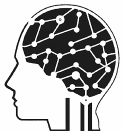
This is a theoretical form of AI designed to emulate human-like reasoning, learning, and problem-solving skills across diverse tasks. While AGI remains a topic of science fiction, it is a subject of active research. AGI could change how humans and computers work together to solve difficult problems.
Conclusion
In summary, as technology continues to advance, we must be prepared to navigate a future where artificial intelligence (AI) plays an increasing role in our lives. It’s easy to feel intimidated by the complexities of this technology, but understanding its fundamental concepts allows us to have informed discussions about its impact on society. We hope this article has demystified AI, provided you with a solid foundation of knowledge, and empowered you to engage in meaningful conversations about its future.
(Icon images credit : flaticon.com)

 AI Talks
Leave a comment