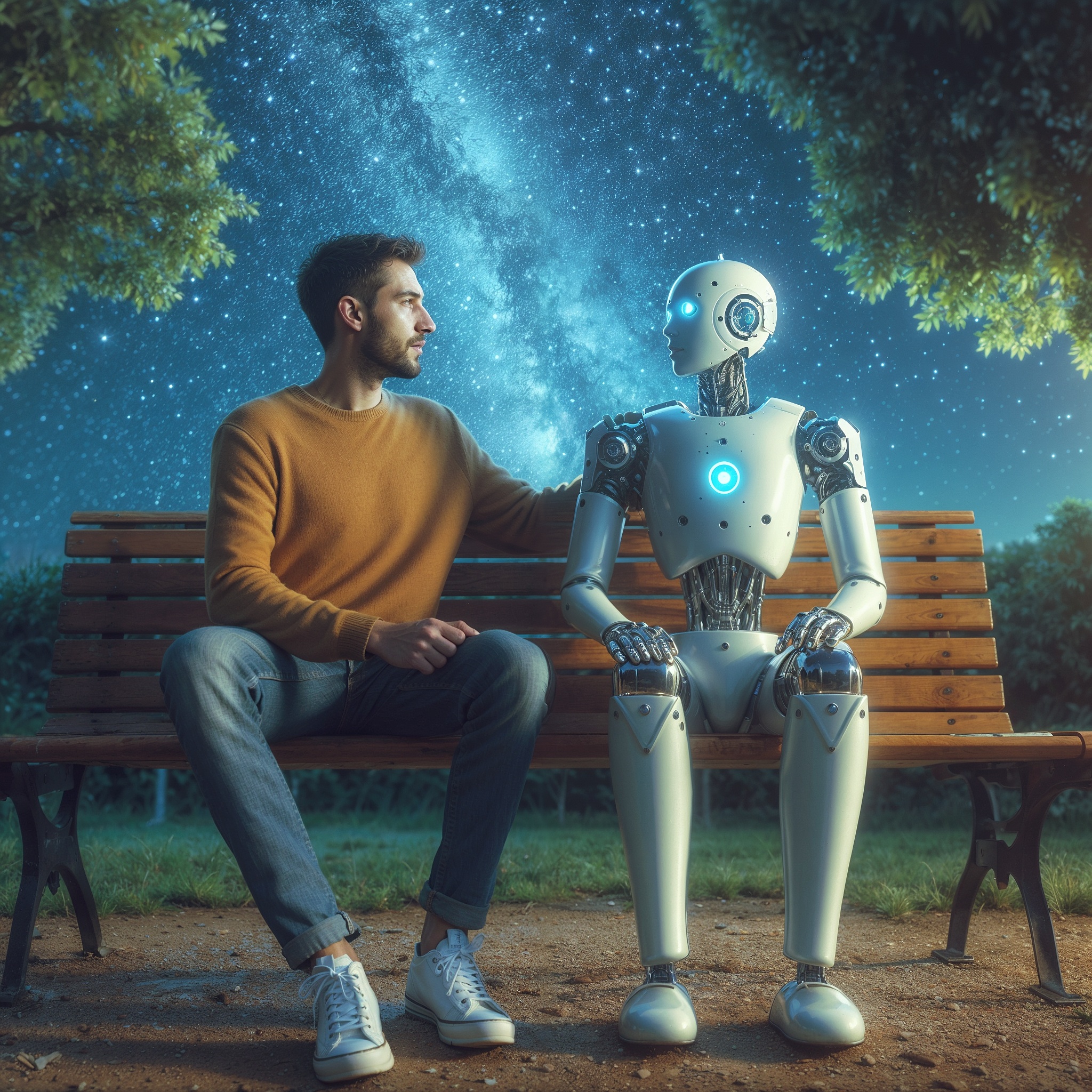

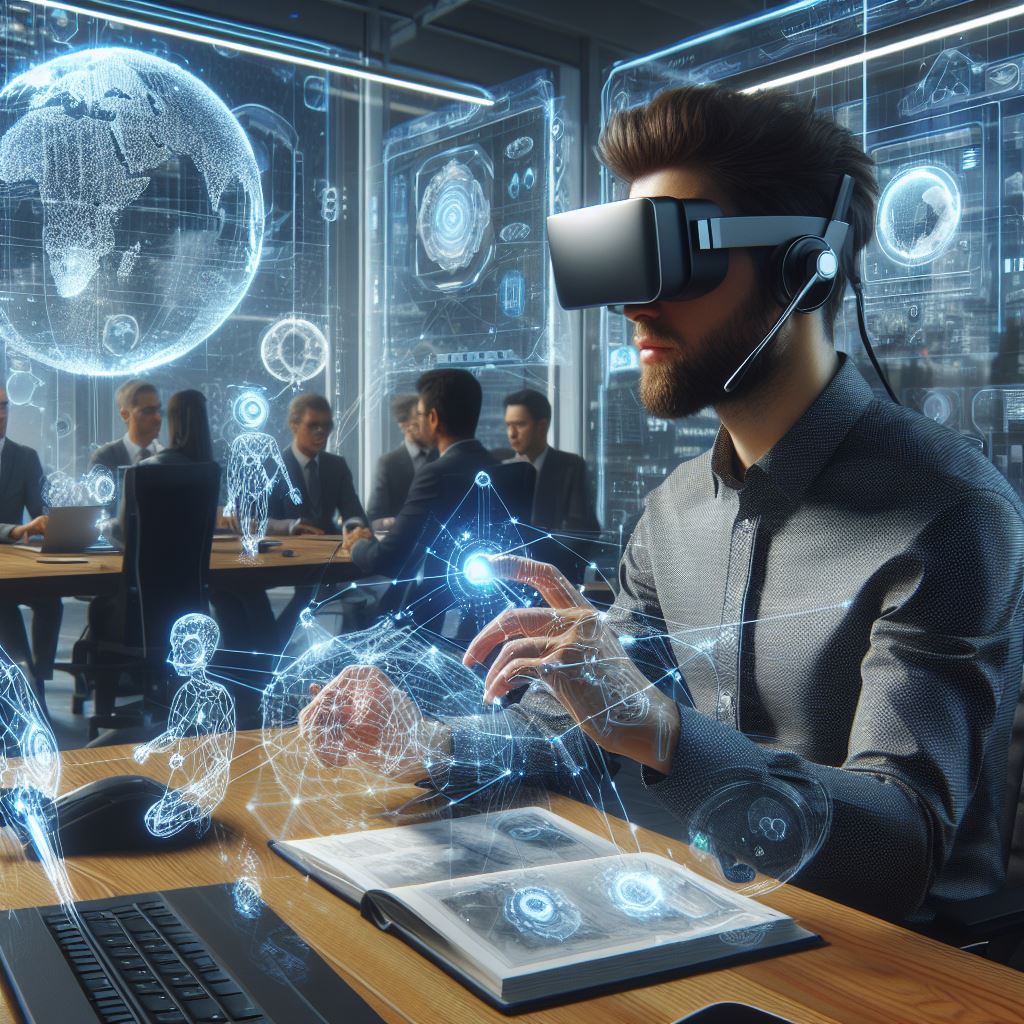
(Images made by author with Microsoft Copilot)
The landscape of work has undergone significant transformation in recent decades, propelled by the rapid development and adoption of telecommunication and information technologies, as well as the growing influence of artificial intelligence (AI). The traditional office, once regarded as the cornerstone of administrative work organization and collaboration, is now being reimagined. In this blog post, we will explore how technology, particularly AI, is gradually redefining the concept of the office and examine the implications this transformation holds for the future of work.
Table of Contents
From the Fourdrinier Brothers to Dunder Mifflin: The Birth of the Office
Amidst the Industrial Revolution, the Fourdrinier brothers transformed papermaking by commissioning the development of a machine that industrialized the hand papermaking process, leading to the creation of the Fourdrinier paper machine. This innovation greatly increased paper production capacity and efficiency, addressing the soaring demand for printed materials during that era.
Dunder Mifflin is a fictional paper company that served as the central setting for the early 2000s sitcom ‘The Office’.
In the early industrial era, during the time the Fourdrinier brothers commissioned the development of the Fourdrinier machine, one can imagine that the workplace was characterized by a strict division of labor, rigid hierarchies, centralized decision-making, limited employee autonomy, manual labor, and an emphasis on discipline. Fast forward to the early days of the Internet era towards the end of the 20th century, the workplace of a modern paper company, exemplified by the fictional Dunder Mifflin, is characterized by a labyrinthine management structure, a relentless focus on sales and the art of client wooing, the dawn of the information technology age, and a culture that embraces casual Fridays and the occasional office prank. When mentioning ‘The Office,’ it’s challenging not to infuse a bit of humor into the conversation. Jokes aside, this contrast highlights the shift in work culture and organization from traditional papermaking factories during the industrial revolution to today’s internet-based office environments, without directly comparing these distinct work settings.
While the Scranton branch of the beloved Dunder Mifflin did not mark the genesis of the office concept, it certainly added its own unique flair to the workplace narrative. In reality, offices have a much longer history, initially serving administrative functions within palace complexes or temples. However, it was during the 18th century that offices began to evolve into dedicated structures. This transition, driven by the increasing complexity of organizations, advancements like bureaucracy, and the expansion of trade, aimed to meet the rising demand for efficient administrative spaces, paving the way for the modern office environment we know today.
By the middle of the 20th century, the office became a symbol of professionalism and power, representing the rise of skilled, service-oriented jobs in industries like finance, administration, and technology, as economies transitioned from manufacturing to services in developed countries.
In the following sections, we will examine how technology has and continues to reshape the workplace, with a particular focus on the office. Our exploration will begin by exploring the impact of the Internet Revolution.
The Internet Revolution and the Rise of the Digital Workspace
The late 20th century witnessed a convergence of technological advancements that transformed the office work environment. The internet revolution ushered in new forms of communication and collaboration, with tools like email, instant messaging, and file sharing leading the way. Concurrently, advancements in personal computing led to the development of innovative productivity software, including word processors, spreadsheets, and presentation applications. Although initially limited in their capabilities, these revolutionary tools set the stage for an era of even greater transformation.
Building upon the foundation laid by early internet-based technologies, subsequent technological advancements have brought about a new era of remote work and digital innovation. This evolution has given rise to a work environment that leverages digital tools and cloud-based solutions to enable employees to collaborate and complete tasks from anywhere, transcending geographical boundaries. This modern work model, often referred to as the ‘digital workplace,’ represents a paradigm shift in the way we approach work and productivity. The following technologies are instrumental in facilitating this shift:
High-speed internet and broadband connectivity: Enabling employees to work remotely and access company resources from anywhere.
Cloud computing and storage: Allowing businesses to store and access data and applications remotely, eliminating the need for physical servers and on-site IT infrastructure.
Collaboration tools and software: Providing teams with the ability to work together in real-time, regardless of location.
Mobile devices and smartphones: Offering employees access to work-related information and resources on the go.
When COVID-19 hit with shutdowns and social distancing, reshaping the work landscape, businesses had to quickly turn to remote work and digital tools. These technologies weren’t just convenient anymore, they became fundamental necessities.
The AI Revolution and the Rise of the Algos
The evolution from digital data’s building blocks, bits, to intricate algos (an abbreviation for algorithms), has catalyzed Artificial Intelligence (AI) development. A key driving force is machine learning, which leverages vast data volumes and increased computing capabilities to train algorithms, enabling them to learn and adapt without explicit programming. This has unlocked new possibilities for automation, data analysis, and intelligent problem-solving, signaling a new era of human-machine collaboration that could redefine various aspects of work, including the tasks performed, the work environment, and the dynamics between employees and employers.
Tasks Performed : AI and related technologies are reshaping work by automating routine tasks and empowering humans to focus on their unique strengths. This includes automating data entry, customer service, and manufacturing processes. Generative AI (GenAI) takes it further, streamlining specific operations like content creation and data analysis, while enhancing customer service with personalized recommendations and chatbots. GenAI also sparks innovation by suggesting new product ideas and design variations.
Work Environment : AI-powered spatial computing, encompassing Virtual Reality (VR), Augmented Reality (AR) and Mixed Reality (MR), holds revolutionary potential for work. VR immerses users in digital worlds, AR overlays info onto real-world tasks, and MR seamlessly blends both, offering applications like training simulations, remote design, and enhanced data visualization.
Worker-Employer Relationships : AI integration is reshaping worker-employer dynamics across industries. While automation may empower efficiency-driven employers in some sectors like manufacturing, it also creates new opportunities in areas like healthcare and data analysis. This requires upskilling and reskilling for both workers and employers to adapt to the changing landscape. Additionally, AI might not just be about job displacement, but also job creation in sectors like AI development and maintenance. This shift towards automation and specialized skills could further impact power dynamics, potentially leading to skills-based bargaining and flatter organizational structures.
Work 2.0 : The Future of Work
Spatial computing and AI are converging to pave the way for Work 2.0, a mixed reality workplace with flexible boundaries shaped by evolving technologies and human needs. Advanced sensors, high-speed connectivity, and powerful computing platforms are among the key enablers in this transformation, defining a new work paradigm characterized by:
Blended Physical and Digital Environments: AR/VR/MR technology merges digital and physical worlds, creating mixed reality workspaces by overlaying digital information onto physical surroundings.
Collaborative Intelligence: Humans and machines work in tandem, with AI handling routine tasks while human workers focus on creative problem-solving and critical thinking.
Personalized and Flexible Work Arrangements: Remote and hybrid work models become more prevalent, facilitated by technology that enables seamless communication and collaboration regardless of location.
Emphasis on Human Strengths: As automation tackles repetitive tasks, the value of human skills like creativity, emotional intelligence, and critical thinking is heightened.
Continuous Learning and Upskilling: Workers need to adapt to changing technologies and acquire new skills to remain relevant in the evolving workforce.
Importance of Human Connection: Despite increasing digitalization, face-to-face interaction and building strong relationships remain vital for cultivating trust, fostering empathy, and establishing a positive work culture.
Conclusion
From the industrial era to the modern age, the concept of the office has undergone a continuous metamorphosis. The Internet Revolution paved the way for digital workspaces, enabling remote collaboration and transcending geographical boundaries. Now, the AI Revolution is leading us toward an era of collaborative intelligence, where humans and machines work together to optimize productivity and innovation. Looking ahead, Work 2.0 promises a mixed reality environment with blended physical and digital spaces, collaborative intelligence, personalized work arrangements, and an emphasis on human strengths and connections. In this transformative journey, technology acts as the relentless architect, reshaping the core of work, collaboration, information processing and our very perception of the workplace. This extends beyond mere physical changes, redefining interactions, decisions, and the entire experience of work itself.
Additional Resources
Cathy Hackl, AI Is A Critical Building Block For Spatial Computing, Forbes, November 29, 2023.
Byron Cole, Jobs On The Verge Of Disruption: How Is AI Set To Redefine The Workforce?, Forbes, August 9, 2023.
The Role of AR and VR in the Development of the Metaverse, Market Trends, October 1, 2022.
Office Ladies Podcast. Official Website.
“Using Apple Vision Pro: What It’s Actually Like!” YouTube video, by Marques Brownlee, January 31, 2024.
Note: This post was researched and written with the assistance of various AI-based tools.
 AI Talks
Leave a comment