
(Images created with the assistance of AI image generation tools)
If 2024 was the year the world woke up to AI, 2025 was the year the gloves came off. It was a year of “agents,” energy crises, and a high-stakes geopolitical showdown that turned the entire industry into a battlefield.
Looking back, the progress has been dizzying. We went from typing prompts to “vibe coding”, and from simple chatbots to autonomous agents that can plan and execute. But it wasn’t all smooth sailing—Wall Street got jittery, power grids groaned, and the rivalry between the U.S. and China hardened into a “Silicon Curtain.”
Here is the review of the year Artificial Intelligence got real.
Table of Contents
The Year of the “Agent” (and the Vibe)
The biggest shift in 2025 wasn’t a bigger model; it was a change in behavior. We moved from “generative AI” (making text/images) to “agentic AI” (doing tasks).
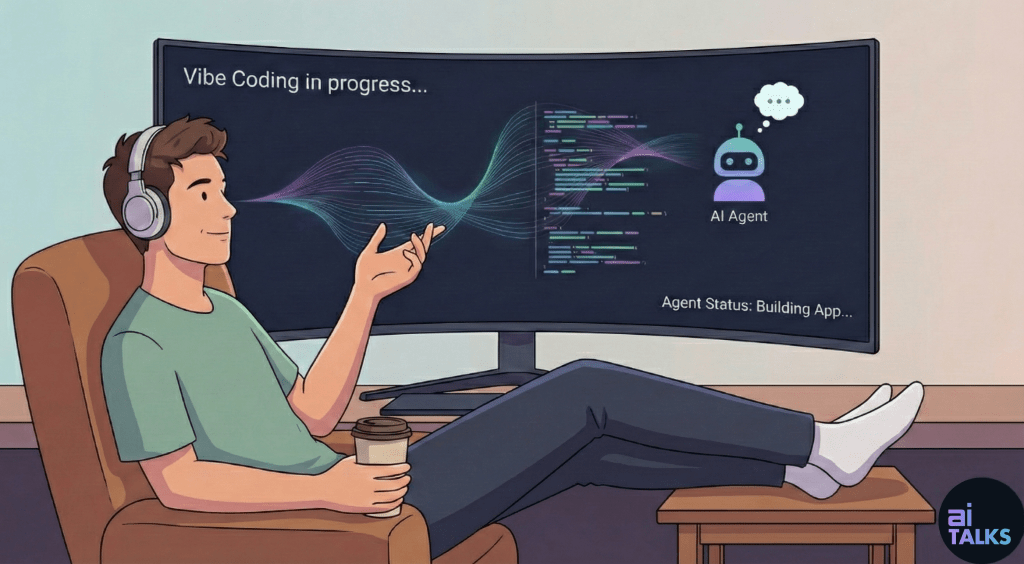
Early in the year, a new phenomenon called “vibe coding” took over, where software engineering shifted from writing lines of code to guiding AI with natural language and “vibes”. By the fourth quarter, technical analysis revealed these agents were using advanced data compression to combat “context rot,” allowing them to handle complex tasks.
But the real maturity moment came in December with the Model Context Protocol (MCP). The Linux Foundation launched this as a core standard to finally let autonomous agents talk to data systems consistently. With Google immediately backing it to make their tools “agent-ready by design”, MCP effectively became the “USB-C of AI”—the missing standard that turned isolated bots into a connected workforce.
The Model Wars: A Game of Leapfrog
If you thought the AI race was settling down, 2025 proved you wrong. It was a chaotic game of leapfrog that kept the leaderboard spinning.
The year kicked off with a shock as Chinese startup DeepSeek released cost-efficient models that disrupted the market. By mid-year, the hype cycle hit a snag; OpenAI’s highly anticipated GPT-5 launched in August but initially disappointed users, struggling with basic tasks.
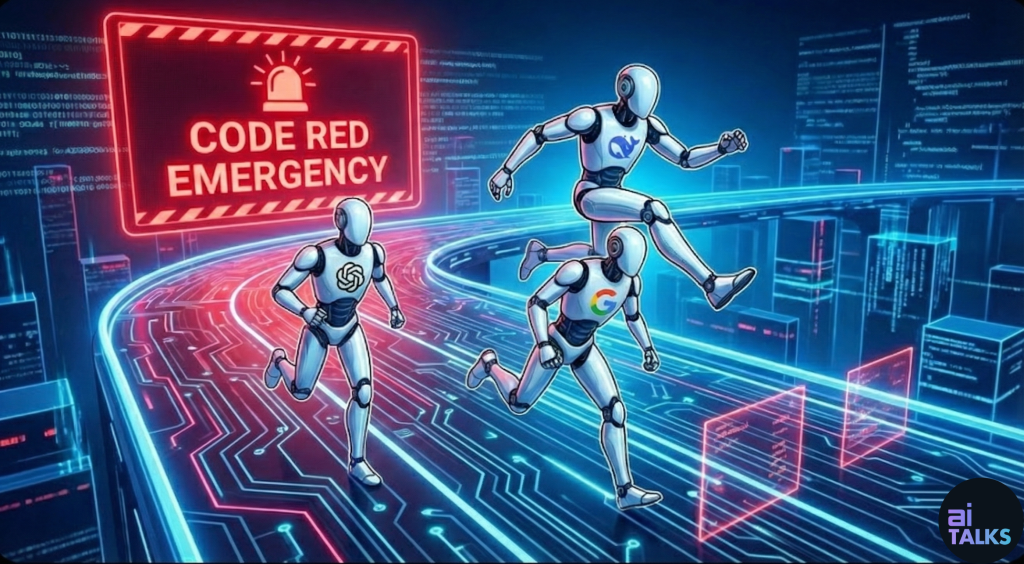
The drama peaked in the fourth quarter. Google launched Gemini 3, its most intelligent model yet. This success helped crown Alphabet as the “Big Tech Winner” of 2025, with its stock gaining more than 60%. The pressure reportedly forced OpenAI into a “code red” emergency, responding swiftly with the GPT-5.2 series, a “powerhouse” designed for professional knowledge work. The lesson? No lead is safe.
Geopolitics: The Silicon Curtain Descends
While companies battled for market share, nations battled for dominance. The rivalry between the U.S. and China became a defining theme of 2025, shifting from trade disputes to a full-blown tech war.
The U.S. strategy focused on containment. We saw the White House issue rules on AI diffusion to manage chip sales , and reports surfaced of the U.S. embedding trackers in chip shipments to enforce controls.
China, in turn, accelerated its drive for self-sufficiency. Shanghai launched a roadmap to double down on open-source projects to achieve semiconductor sovereignty by 2027. Meanwhile, Huawei’s founder argued for a distinctly different path: focusing on practical industrial automation rather than the U.S. obsession with AGI.
Hitting the Physical Limit: Energy & Infrastructure
As AI brains got bigger, the physical world struggled to keep up. 2025 was the year the “cloud” crashed into the hard reality of power grids and balance sheets.
We saw a massive infrastructure strain, with data centers demanding so much electricity that they threatened to exceed Japan’s total consumption. Tech giants scrambled to hide the costs, moving over $120 billion in debt off their balance sheets to fund these massive builds.

The chip war was equally intense. Nvidia became the first $5 trillion company, but they didn’t rest on their laurels. As rivals like Google’s Ironwood TPU closed in , Nvidia executed a massive strategic strike in late December: a $20 billion deal to license Groq’s ultra-fast IP and hire their top talent. This move signals that the next battleground isn’t just about training big models, but running them in real-time.
The Human Element: Jobs and Jitters
Economically, 2025 was a rollercoaster. Wall Street spent months sounding the alarm on a potential “AI bubble”, with companies like Oracle facing volatility over debt fears.
For workers, the anxiety was real. Computer science graduates from elite schools like Stanford struggled to find jobs as entry-level coding roles vanished. Yet, the narrative wasn’t purely dystopian. Some experts argued AI would unlock suppressed demand for work rather than cause mass unemployment.
We also learned that AI isn’t invincible. New economic research found that AI models often overestimate how smart humans are, failing to predict our irrational behavior. It was a humbling reminder that while AI can pass exams, it still doesn’t fully understand us.
Looking Ahead to 2026
As we close the book on 2025, the frontier is shifting from our screens to the physical world. With Google DeepMind’s AlphaFold now targeting the simulation of entire human cells and “world models” enabling AI to grasp physical reality, 2026 is set to be the year AI gains hands, eyes, and a body. If 2025 was the year the Agent went to work, 2026 is poised to be the year the Android enters the fold.
Dive Deeper
This review synthesizes the critical thematic shifts originally detailed in our AI Weekly series throughout 2025. For a deeper dive into the specific events, technical breakthroughs that shaped this year, we invite you to explore our complete archive.
Explore the Full AI Weekly Archives →
This post was researched and written with the assistance of various AI-based tools.
 AI Talks
Leave a comment