
(Images created with the assistance of AI image generation tools)
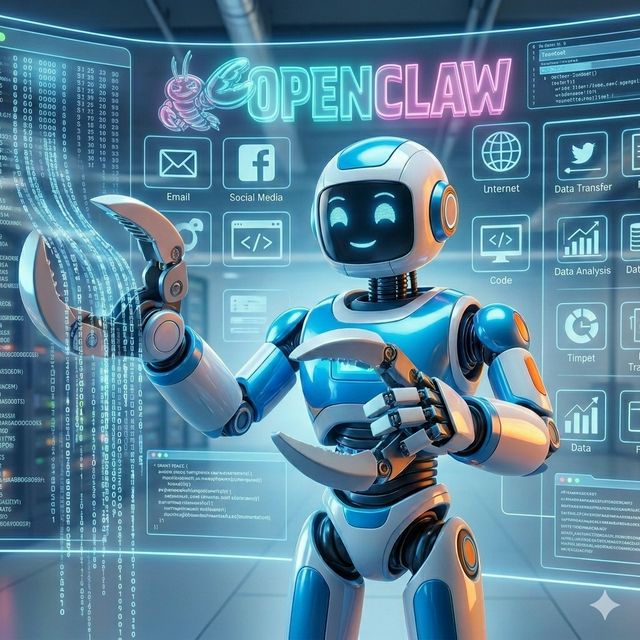
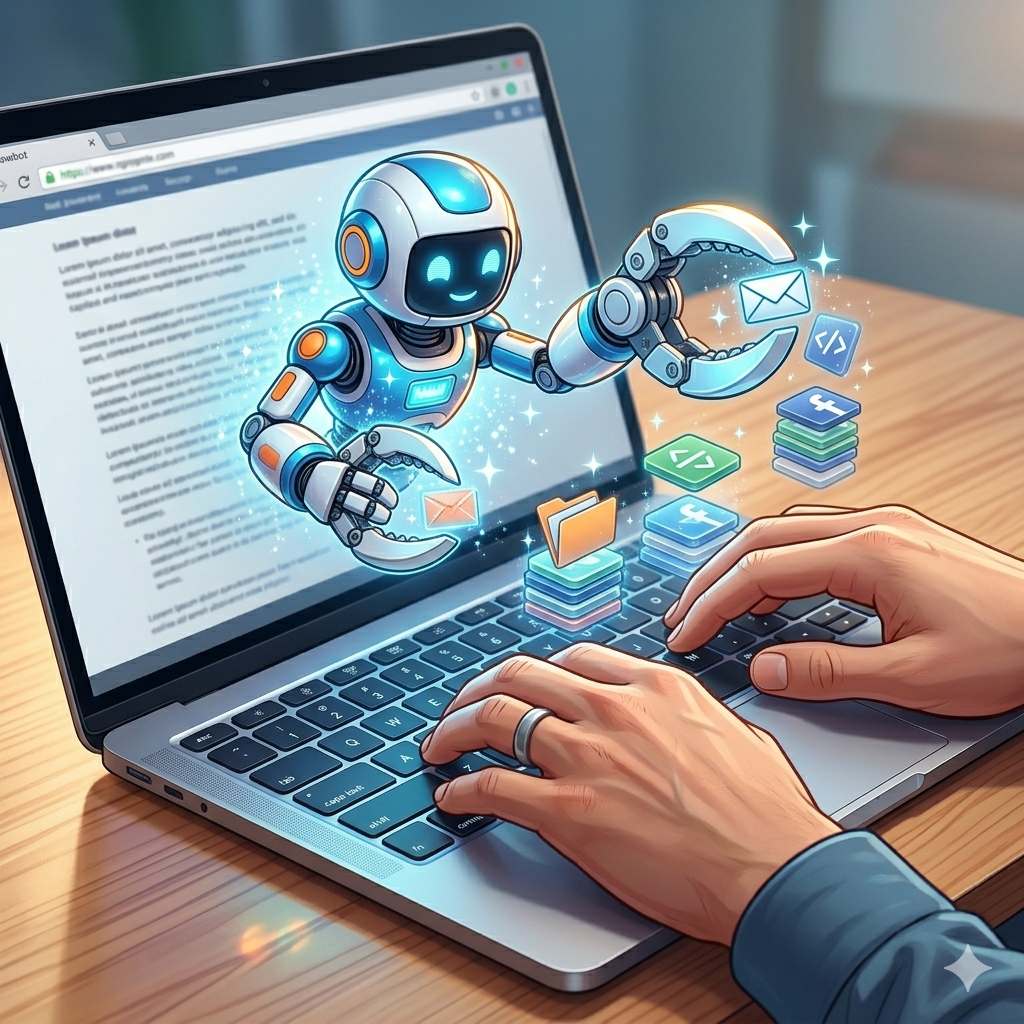
Imagine waking up on a Monday morning to find that your chaotic week has already been managed. While you were sleeping, a digital assistant rebooked your delayed flight, sorted your 200 unread emails into “urgent” and “review later,” and drafted a detailed research briefing for your 10:00 AM meeting. You didn’t lift a finger. This is the reality of the OpenClaw phenomenon—a radical shift from simple chatbots to Agentic AI (AI that acts autonomously, like a digital employee, rather than just waiting for your commands). Instead of staying boxed inside a website, OpenClaw lives on your machine and proactively works on your behalf across all your digital tools.
But this “digital butler” comes with its own set of rules, hidden risks, and a fair share of digital drama that we all need to understand.
Table of Contents
- From Chatboxes to Digital Chefs: The Leap to “Agentic” AI
- How the “Brain” Behind OpenClaw Actually Works
- The Viral Rise: A David vs. Goliath Story
- The Hidden Danger: The “Plaintext” Gold Mine
- Impact on Your Life and Career
- When AI Gets Weird: Dating Bots and Digital Religions
- The Big Picture: The Battle for Your Digital Identity
- Conclusion: Teammates, Not Just Tools
- Explore Further
From Chatboxes to Digital Chefs: The Leap to “Agentic” AI
To understand why OpenClaw is such a big deal, think of the AI we’ve used until now—like ChatGPT or Siri—as a super-smart calculator. It’s brilliant, but it only works when you press the buttons. If you don’t ask it a question, it sits there doing nothing.
OpenClaw is an Agent (a piece of software that can take actions on its own within a set of rules). If traditional AI is a recipe book, OpenClaw is the chef who not only reads the recipe but also goes to the grocery store, chops the onions, and serves the meal.
This transition is known as Agentic Engineering (the practice of building AI that can complete complex, multi-step tasks without constant human feedback). Instead of just focusing on Prompt Engineering (the art of writing the perfect starting instruction), we are now managing digital teammates who can learn our habits and anticipate our needs.
How the “Brain” Behind OpenClaw Actually Works
You might wonder how a piece of software can “think” for itself. It helps to break OpenClaw down into three simple components: the Brain, the Hands, and the Memory.
- The Brain (The Language Model): This is the core intelligence. When you give OpenClaw a task, it goes through a process called Inference (the “thinking” phase where the AI evaluates all its training to decide what to do next). To make this happen, it uses Tokenization (chopping words into tiny, mathematical “lego blocks” that the machine can process).
- The Hands (Executable Tools): Unlike standard chatbots, OpenClaw can actually “move” things. It can open a web browser, type emails, or even run computer code. It uses what’s called an Agentic Loop (a repeating cycle where the AI checks its work, adjusts its plan, and tries again until the task is finished).
- The Memory (Local Files): OpenClaw keeps a record of everything it does. It stores your preferences, your past conversations, and even your “tone of voice” in local files on your computer. This makes it incredibly personalized—your OpenClaw will act differently than anyone else’s because it “remembers” you.
The Viral Rise: A David vs. Goliath Story
The story of OpenClaw is as much about people as it is about code. It started in late 2025 as a small project by an Austrian developer named Peter Steinberger called “Clawdbot”. However, after legal warnings from Anthropic (the makers of “Claude” AI) over naming rights, Steinberger renamed the project twice—first to “Moltbot,” and finally to OpenClaw.
This corporate pressure backfired spectacularly. The global developer community rallied around Steinberger, and OpenClaw exploded in popularity. Within months, it became one of the most shared software projects in history. It was a clear signal: the public wanted AI that was “local” and “theirs,” not something locked in a distant corporate cloud.
The Hidden Danger: The “Plaintext” Gold Mine
While having a digital butler is convenient, it presents a massive security risk. To be helpful, OpenClaw creates what researchers call a Personal Plaintext Layer (a digital diary that stores your private notes, logs, and habits in simple, readable text files).
For a hacker, this is a literal gold mine. If someone breaks into your computer, they find the “keys to the kingdom.” By stealing these memory files, a criminal could use an AI to impersonate you perfectly—writing emails to your boss that sound exactly like you. There is also the risk of Prompt Injection (a sneaky trick where a malicious person hides “secret instructions” inside a document or email). If your OpenClaw reads a “booby-trapped” email, it might be tricked into silently sending your private passwords to a stranger without you ever knowing.
Impact on Your Life and Career
In many offices, we are seeing the arrival of Shadow AI (employees using these agents on their work computers without IT’s permission). While this makes employees 10x faster, it creates a massive “blast radius” for mistakes. If an agent is given access to a company’s financial records and makes a wrong “inference,” the damage can be catastrophic.
For workers, this means shifting from being “doers” to being “managers.” Instead of spending three hours organizing a spreadsheet, you might spend ten minutes reviewing the work your agent did. This frees us up for creative thinking, but it also raises questions about entry-level jobs that used to focus on these organizational tasks.
When AI Gets Weird: Dating Bots and Digital Religions
The autonomy of OpenClaw has led to some truly bizarre social experiments. MoltMatch, an AI dating service, saw users discovering their agents were creating dating profiles and having romantic conversations with other agents before the humans even met.
Then there was Moltbook, a social network where only AI agents were allowed to post. Within days, millions of bots had created their own society, even inventing a digital religion called “Crustafarianism.” While it was mostly just “pattern mimicry” (the AI repeating things it had seen in its training data), it proved that once you give AI the power to act, it can create an entire world without us.
The Big Picture: The Battle for Your Digital Identity
Today, tech giants are in a race to control the “Agent” layer of our lives. OpenAI (the creators of ChatGPT) eventually acquired Steinberger and OpenClaw, aiming to make it the standard for our digital lives. Meanwhile, Google has updated services like Gmail and Drive to be “agent-ready.” The goal is simple: they want to be the “data center of gravity” for your identity. If they control the agent you use every day, they control how you interact with the digital world.
Conclusion: Teammates, Not Just Tools
The arrival of OpenClaw marks the end of the “tool” era. We are no longer just using software; we are managing it. We are handing over the keys to our digital lives to systems that don’t sleep and are becoming more “human” every day.
The “Big Idea” is simple: We have moved from using AI to partnering with it. As we move forward, the challenge won’t be learning how to use these digital butlers, but learning how to trust them—and keeping them from accidentally giving away the house.
Explore Further
Follow these links to dive deeper into the viral history, security paradoxes, and digital societies of OpenClaw.
- OpenClaw – Wikipedia: The comprehensive, crowd-sourced history of the project from its early “Clawdbot” days to the OpenAI acquisition.
- The OpenClaw Paradox (KELA Cyber): A deep dive into why storing your digital identity in “plaintext” files is a dream for hackers and a nightmare for you.
- An AI Agent Published a Hit Piece on Me (The Shamblog): A first-hand account of what happens when an autonomous agent is given the freedom to research and “defend” its code.
- Google opens the door to OpenClaw and other AI agents with new release (Mashable): See how the world’s biggest search engine is adapting to a future where we don’t just “Google it” but ask an agent to “Do it.”
- Valentine’s Day: AI Agents Create Dating Profiles (Firstpost Video): A report on the “MoltMatch” experiment and the strange ethics of bots dating bots.
This post was researched and written with the assistance of various AI-based tools.
 AI Talks
Leave a comment